

Dental health has a quiet way of affecting everything. It influences how comfortably patients eat, how confidently they smile, how fresh their breath feels, and how protected their overall health can be over time. Yet many people treat dental appointments as something to schedule only when pain appears. The problem is that tooth decay, gum disease, enamel wear, and oral infections often develop long before they become obvious.
That is why dental check-ups matter. They are not just quick cleanings or routine appointments to cross off a calendar. They are preventive health visits designed to catch problems early, remove buildup that brushing cannot handle, and help patients understand what is happening in their mouth before small issues become expensive or uncomfortable.
If you have ever wondered what actually happens during a dental check-up, this guide breaks it down clearly. Keep reading to learn why routine care is worth protecting, what your dentist and hygienist are looking for, and why skipping your visits rarely saves time in the long run.
What Is a Dental Check-Up?
A dental check-up is a preventive visit that evaluates the health of your teeth, gums, bite, and surrounding oral tissues. It usually includes a professional cleaning, a dental exam, and guidance for keeping your mouth healthy between visits.
When patients ask, “What does a dental exam include?” the answer often depends on their needs, history, and symptoms. However, a typical visit may include:
- Review of dental and medical history
- Oral health discussion
- Professional cleaning
- Plaque and tartar removal
- Gum evaluation
- Tooth-by-tooth exam
- X-rays when needed
- Oral cancer screening
- Bite and jaw assessment
- Personalized home care recommendations
- Treatment planning if concerns are found
Dental check-ups are designed to prevent problems, not just react to them. That is why skipping is never worth it. Delaying care can allow plaque, tartar, decay, and gum inflammation to progress quietly until treatment becomes more involved.
Why Skipping Costs More Later
Skipping a dental visit may feel harmless at first. If nothing hurts, it is easy to assume everything is fine. But oral health issues often develop silently.
A small cavity may not hurt until it reaches deeper layers of the tooth. Gum inflammation may not feel serious until bleeding, recession, or bone loss begins. Tartar can build up even when patients brush daily. By the time pain appears, the problem may already require more complex treatment.
Routine visits help protect patients from that cycle. They allow dental teams to catch concerns early, explain options, and support healthier habits before damage becomes more difficult to reverse.
1. Your Visit Starts With a Health Review
A good dental check-up begins before anyone picks up an instrument. Your dental team may ask about medical changes, medications, allergies, recent surgeries, pregnancy, chronic conditions, or new symptoms. This matters because oral health is connected to whole-body health. Medications can cause dry mouth.
Diabetes can influence gum health. Acid reflux can affect enamel. Stress can contribute to clenching and grinding. This conversation helps the provider understand what may be influencing your mouth beyond brushing and flossing. It also helps personalize the visit so recommendations are not generic.
2. The Hygienist Checks Your Gum Health
Healthy gums are the foundation of a healthy smile. During a check-up, the hygienist may measure the spaces between the teeth and gums using a small instrument. These measurements help identify inflammation, gum recession, or signs of periodontal disease.
Patients often focus only on teeth, but gum health is just as important. Gum disease can progress quietly and may lead to bleeding, bad breath, loose teeth, and bone loss if untreated. This is one reason routine dental check-ups are so valuable. They help identify gum changes before patients notice them at home.
3. Professional Cleaning Removes What Brushing Cannot
Even excellent brushing and flossing cannot remove hardened tartar. Plaque is a sticky film of bacteria that forms on teeth. When plaque is not fully removed, it can harden into tartar, which attaches firmly to the teeth and usually requires professional tools to remove.
This is where plaque and tartar removal professional care becomes essential. During cleaning, the hygienist removes buildup from areas that are difficult to reach at home, especially along the gumline and between teeth. This cleaning helps lower the risk of cavities, gum inflammation, and persistent bad breath.
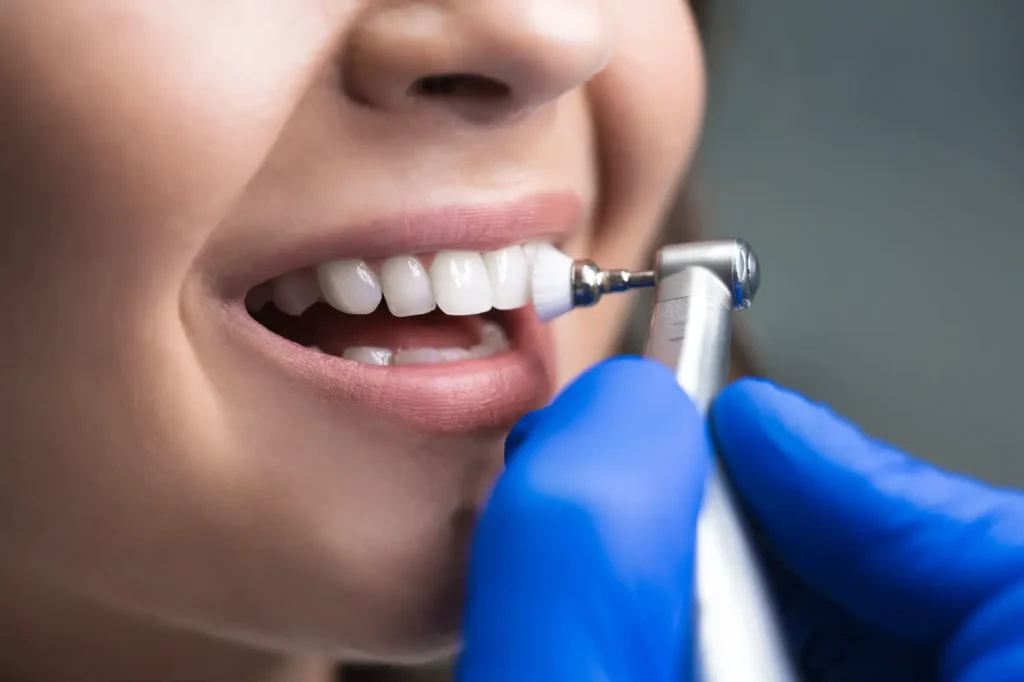
4. Polishing Helps Smooth the Tooth Surface
After plaque and tartar are removed, the teeth are often polished. Polishing helps smooth the tooth surface and remove surface stains. Patients usually notice their teeth feel cleaner, fresher, and smoother afterward.
This step is not only cosmetic. A smoother surface can make it harder for plaque to cling immediately after cleaning. It is one of the simple but satisfying professional dental cleaning benefits that patients feel right away.
5. The Dentist Examines Each Tooth
The dentist will examine the teeth carefully to look for cavities, cracks, worn enamel, broken fillings, loose restorations, or signs of infection.
This part of the exam is important because not every dental problem causes pain early. A small crack, failing filling, or early cavity may be easy to treat when found soon. Left alone, it may later require a crown, root canal, or extraction.
A dental check-up gives patients the chance to act early instead of waiting for pain to make the decision urgent.
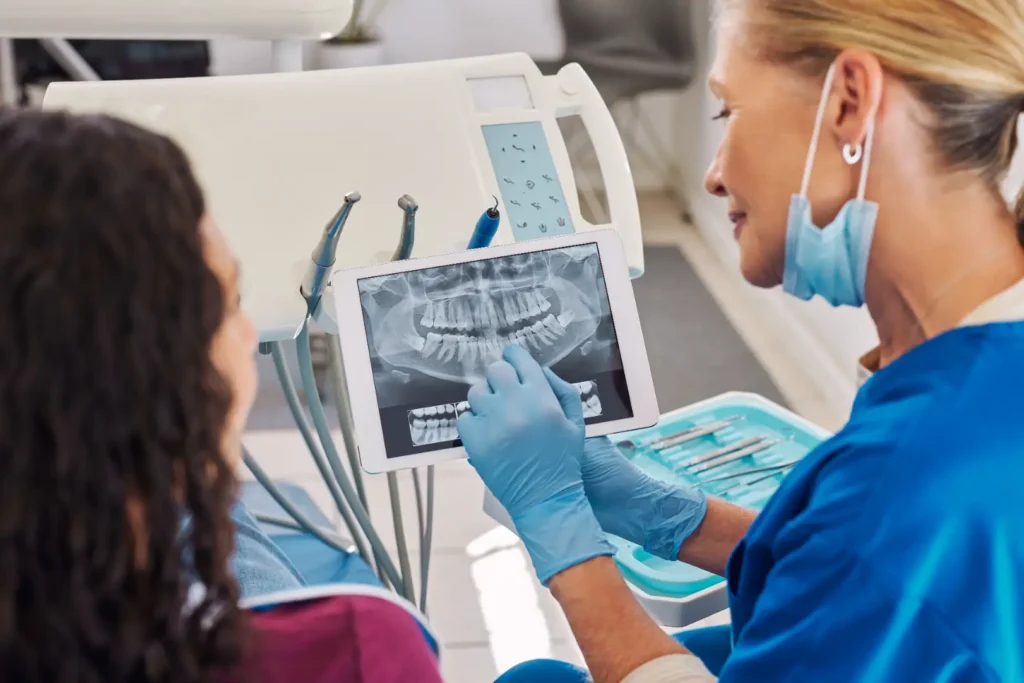
6. X-Rays May Be Recommended
X-rays are not needed at every visit for every patient, but they are an important diagnostic tool. They can reveal issues that are not visible during a visual exam, including decay between teeth, bone loss, infections, impacted teeth, or problems beneath old restorations.
Your provider will recommend X-rays based on your oral health history, symptoms, age, risk level, and time since previous imaging. This helps the dental team see the full picture, not just what is visible above the gumline.
7. Your Bite and Jaw May Be Evaluated
A dental check-up is not only about cavities. The dentist may evaluate how your teeth come together when you bite, whether there are signs of grinding, and whether jaw tension or TMJ-related symptoms are present.
Worn enamel, chipped edges, jaw soreness, and headaches can all point to clenching or grinding. Identifying these issues early can help protect teeth from unnecessary wear and prevent discomfort from worsening over time.
8. Oral Cancer Screening May Be Included
During the exam, the dentist may check the lips, cheeks, tongue, throat, gums, and other oral tissues for unusual changes. This screening is quick, but important. Persistent sores, lumps, red or white patches, or unexplained tissue changes should be evaluated.
Many patients do not realize that dental check-ups include more than teeth. They also support broader oral health awareness.
9. Your Home Care Routine Gets Reviewed
A good provider does not simply clean your teeth and send you home. They may ask about your brushing habits, flossing technique, sensitivity, mouthwash use, diet, dry mouth, or bleeding gums. This helps identify small daily changes that could improve results.
For example, some patients brush too hard and damage the gums. Others floss inconsistently because the technique feels frustrating. Some use whitening products that increase sensitivity. Your dental team can help adjust your routine, so it actually works for your mouth.
10. You May Discuss Dental Cleaning vs. Deep Cleaning
Some patients are surprised when they are told they need more than a standard cleaning. A regular cleaning is typically recommended for patients with generally healthy gums. A deep cleaning, also called scaling and root planing, may be recommended when gum disease is present and bacteria or tartar have collected below the gumline.
Understanding dental cleaning vs. deep cleaning matters because they are not the same service. A deep cleaning is more therapeutic and targets gum disease more directly. If your provider recommends it, they should explain why, what areas are affected, and what the treatment plan involves.
A Healthier Smile Starts With Showing Up
Dental check-ups are not just about clean teeth. They are about prevention, early detection, comfort, confidence, and long-term oral health. From professional cleaning to gum evaluation, X-rays, exams, and personalized guidance, each part of the visit plays a role in helping patients avoid bigger concerns later.
At Fame By You, patients can take a proactive approach to wellness by understanding the value of regular dental check-ups and consistent preventive care. Skipping may feel convenient in the moment, but protecting your smile is always worth the appointment.
Call us today to schedule your appointment!