


Seeing a streak of pink in the sink after brushing is easy to dismiss. Maybe you brushed too hard. Maybe you have not flossed in a while. But when bleeding keeps happening, your gums may be giving you an early warning that deserves more attention than simply switching toothbrushes.
Bleeding can be one of the first signs of inflammation around the teeth. When gum disease is responsible, addressing it early may prevent the condition from progressing and affecting the tissues and bone supporting your teeth. Professional gum disease treatment can identify what is happening below the gumline and determine the level of care you need.
Keep reading to learn what bleeding gums may be telling you and when it is time to have them checked.
What Your Bleeding Gums May Be Saying
Bleeding is a symptom rather than a diagnosis, so understanding what is causing it matters. From plaque buildup to more advanced periodontal disease, your gums can reveal quite a bit about what is happening with your oral health.
1. Your Gums May Be Inflamed
Healthy gums generally should not bleed routinely during normal brushing and flossing. When plaque accumulates along the gumline, bacteria can trigger an inflammatory response. The gums may become red, swollen, tender, or more likely to bleed. This early stage of gum disease is known as gingivitis.
Many patients first notice bleeding gums when brushing because brushing creates enough contact with inflamed tissue to make it bleed. The toothbrush may seem like the cause, but it can simply be revealing inflammation that is already present.
Brushing aggressively can certainly irritate the gums. Using a hard-bristled toothbrush or applying too much pressure may contribute to trauma as well. That is why persistent bleeding deserves an evaluation instead of an assumption about its cause.
If the gums continue to bleed despite gentle brushing and regular oral hygiene, it is worth finding out why.
2. Plaque May Be Building Up Along the Gumline
Plaque is a sticky film of bacteria that continually forms on the teeth. Brushing and cleaning between the teeth help disrupt it before it builds up. When plaque remains around the gumline, inflammation can follow.
Plaque that is not adequately removed can also harden into tartar, also called calculus. Once this happens, regular brushing cannot simply scrub it away. Professional dental cleaning is needed to remove those hardened deposits. This is why bleeding gums are often connected to oral hygiene even when a patient brushes every day.
Brushing quickly may miss the gumline. Toothbrush bristles also cannot adequately clean every surface between neighboring teeth. If those spaces are routinely skipped, plaque can accumulate where it is difficult to see.
The solution is not necessarily to brush harder. Better technique and appropriate professional care are much more useful than aggressive scrubbing.
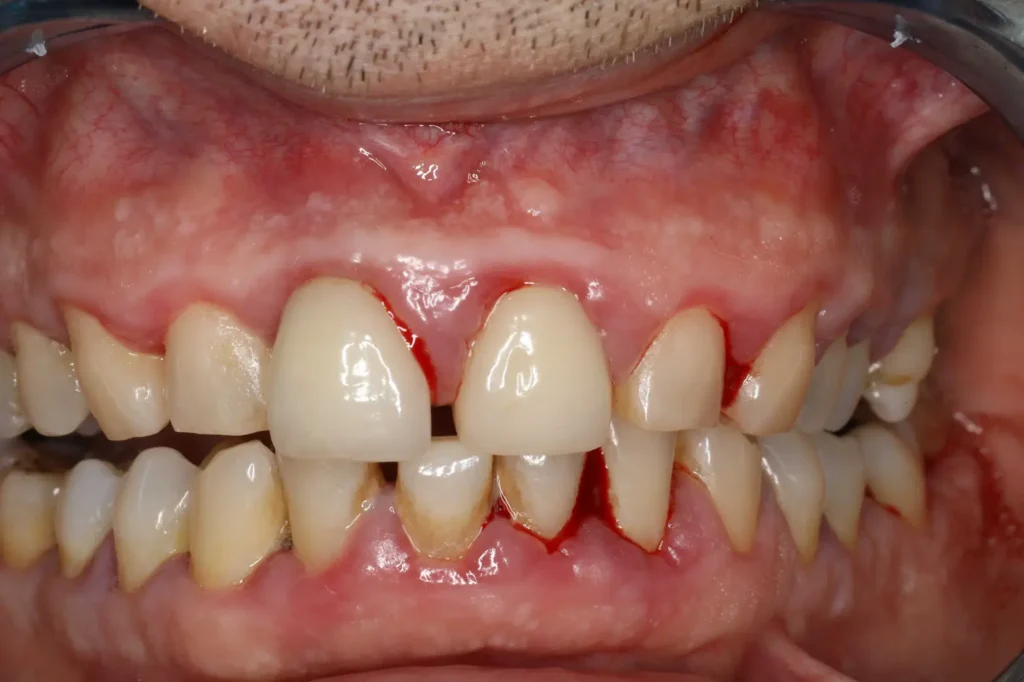
3. You Could Be Seeing Early Gum Disease Signs
Gum disease can be easy to underestimate because its early stages may not hurt. A patient can have inflammation without experiencing the kind of discomfort that would normally prompt an urgent dental visit.
Bleeding is one of several early gum disease signs worth noticing. Other changes may include:
- Red or swollen gums
- Gum tenderness
- Persistent bad breath
- Bleeding during brushing or flossing
- Changes around the gumline
- Increasing sensitivity in some cases
Not every person with one of these symptoms has gum disease. The important point is that recurring changes should not automatically be considered normal. Early recognition matters because gum disease can progress.
A patient who seeks care while inflammation is still limited to the gums may have a very different treatment experience from someone who waits until the deeper supporting structures around the teeth have become involved. Pain is not the only signal that tells you to visit the dentist.
4. Gingivitis and Periodontitis Are Different
Understanding gingivitis vs. periodontitis helps explain why dentists take bleeding gums seriously. Gingivitis is the early stage of gum disease. Inflammation affects the gum tissue, but the supporting bone around the teeth has not yet been destroyed by periodontal disease.
At this stage, appropriate professional cleaning combined with consistent home care can often return the gums to health. Periodontitis is more advanced. As inflammation and infection progress below the gumline, the tissues supporting the teeth can become damaged. Periodontal pockets may deepen, and bone supporting the teeth can be lost.
This difference is significant because periodontitis is not simply “really bad gingivitis.” Once periodontal attachment and bone have been lost, they do not simply grow back because the gums stop bleeding.
Treatment then focuses on controlling the disease, reducing harmful bacterial buildup, maintaining the supporting structures that remain, and limiting further progression. That is why early bleeding deserves attention.
5. Bleeding Can Happen Without Pain
One reason gum disease progresses unnoticed is that people naturally associate serious dental problems with pain. If nothing hurts, it is tempting to assume nothing important is happening. Periodontal disease does not always follow that rule.
Inflammation may progress quietly, especially during its earlier stages. A patient may notice blood during brushing long before experiencing significant discomfort. This helps answer the common question, is bleeding gums serious?
A single episode of minor bleeding does not necessarily mean you have advanced gum disease. Your gums may have been irritated, or you may have accidentally injured the tissue. Repeated or unexplained bleeding is different.
If your gums regularly bleed when you brush, floss, or eat, it is worth discussing with a dental professional. The absence of pain should not be used as proof that everything is healthy. Sometimes the quietest symptoms are the easiest ones to postpone.
6. Avoiding the Bleeding Area Can Make Things Worse
It is an understandable reaction. You floss, your gums bleed, and you decide to leave that area alone for a few days. Unfortunately, avoiding plaque removal can allow more buildup to remain around inflamed gums.
If the bleeding is related to gingivitis, gentle and consistent oral hygiene is important. The goal is not to attack the gums with aggressive brushing or snap floss into tender tissue. It is to clean carefully and regularly.
A soft-bristled toothbrush can help reduce unnecessary irritation. Patients should also clean between their teeth using a method recommended for their individual needs. If an area continues to bleed despite improved home care, professional evaluation becomes even more important.
The dentist or hygienist can look for tartar, periodontal pockets, gum recession, or other findings that cannot be assessed simply by looking in the bathroom mirror. You should not have to guess whether you are cleaning too much or dealing with disease.
7. Bad Breath May Be Part of the Same Story
Occasional bad breath happens to almost everyone. Persistent bad breath, however, can sometimes accompany gum disease. Bacteria and debris can collect around teeth and beneath inflamed gum margins. If periodontal pockets develop, these deeper spaces can become more difficult to clean with normal brushing and flossing alone.
A patient may therefore notice both bleeding and persistent unpleasant breath. Mouthwash may temporarily improve the smell, but it does not remove hardened tartar or treat deeper periodontal infection. That is an important distinction.
Covering a symptom is not the same as addressing its source. If bad breath occurs alongside bleeding, swollen gums, recession, or other changes, a periodontal evaluation may help identify whether gum disease is contributing.
The same principle applies to bleeding itself. Simply making the blood disappear is not the ultimate goal. Healthy gums are.
8. Receding Gums Can Signal a Bigger Problem
Bleeding is not the only change patients may notice as periodontal problems progress. The gumline itself can begin to look different. Teeth may appear longer because gum tissue has receded. Small spaces may become visible between teeth. Tooth roots can become exposed, sometimes creating sensitivity.
Gum recession has several potential causes and does not automatically mean someone has periodontitis. Aggressive brushing, tooth position, thin gum tissue, and other factors can play a role. However, recession combined with bleeding and periodontal pocketing deserves careful attention.
If gum disease has affected the structures supporting a tooth, professional periodontal treatment may be necessary to control the condition. This is another reason a visual inspection at home has limitations. Two patients can both see recession in the mirror but have very different underlying causes. An examination helps separate cosmetic changes from signs of active disease.
9. Loose Teeth Are a Later Warning
Bleeding can occur relatively early. Tooth mobility is a much more concerning development. Teeth depend on healthy bone, periodontal ligaments, and surrounding tissues for support. Advanced periodontal disease can damage those structures.
As support is lost, teeth may begin to feel loose or shift position. A patient’s bite can also start feeling different. At this point, the question why do my gums bleed becomes only part of a larger periodontal concern.
The priority is assessing how much supporting tissue has been affected and what can be done to stabilize oral health. Waiting until teeth become mobile is exactly what early periodontal care tries to avoid.
Regular dental examinations allow changes in gum health to be identified earlier. Periodontal measurements and dental imaging can provide information that patients cannot obtain at home. Bleeding may feel minor compared with a loose tooth, but that is precisely why it can be useful as an early warning.

Listen to the Little Warning
Bleeding gums do not always mean something serious is happening, but repeated bleeding deserves more than a shrug. It may be one of the earliest opportunities to recognize inflammation before gum disease causes more significant damage.
At Fame By You, an evaluation can help determine what your gums are actually telling you and whether professional gum disease treatment is appropriate. Addressing the cause rather than simply tolerating the symptom can help protect the gums, teeth, and supporting structures for the long term.
Call us today to schedule your appointment!