

Sometimes it is not the cavity that catches your attention. It is the dark or silver spot left behind from dental work done years ago. Older metal restorations can stand out against natural enamel, while decay itself may also create dark areas that make a tooth look discolored. The good news is that appearance is only one part of the conversation.
Modern dental fillings can repair teeth affected by cavities while restoring the structure needed for everyday biting and chewing. Tooth-colored composite has become a popular alternative to traditional metal amalgam, but patients understandably want to know whether choosing a natural-looking material means sacrificing durability.
Continue reading as we compare the two materials, what influences their lifespan, and when an older filling actually needs attention.
Which Filling Goes the Distance?
There is no single expiration date for a dental restoration. Amalgam has a long history of durability, while today’s composite materials can also provide years of service when properly selected, placed, and cared for.
1. Metal Has a Long Track Record
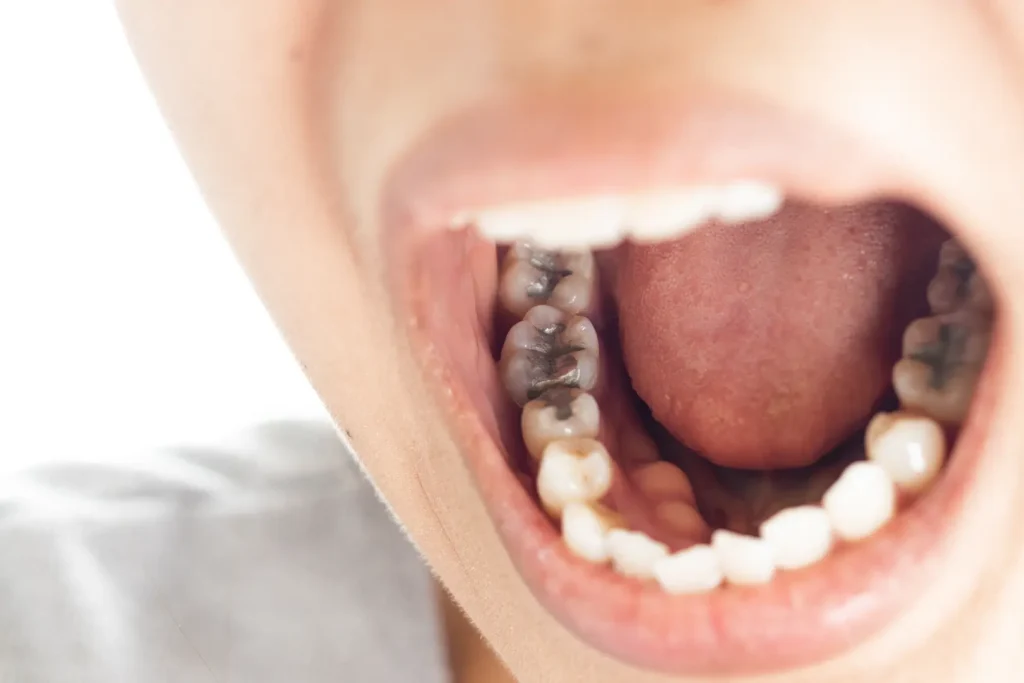
Dental amalgam has been used for generations. It is commonly called a silver or metal filling because of its appearance, although the material is actually an alloy containing several metals, including mercury. One of amalgam’s best-known qualities is durability.
It has traditionally performed well in back teeth, where restorations must tolerate considerable chewing pressure. Amalgam can also be useful in situations where maintaining a completely dry treatment area during placement is challenging.
This history is one reason the composite vs. amalgam fillings discussion cannot be reduced to appearance alone. Metal restorations may not blend into the smile, but many have remained functional for a long time.
Still, “metal lasts longer” is not a rule that applies to every patient or every tooth. The size and location of the restoration matter, as do biting forces, oral hygiene, and the condition of the remaining natural tooth.
A small filling in a low-stress area has a very different job from a large restoration covering much of a molar.
2. Composite Has Become Much Stronger
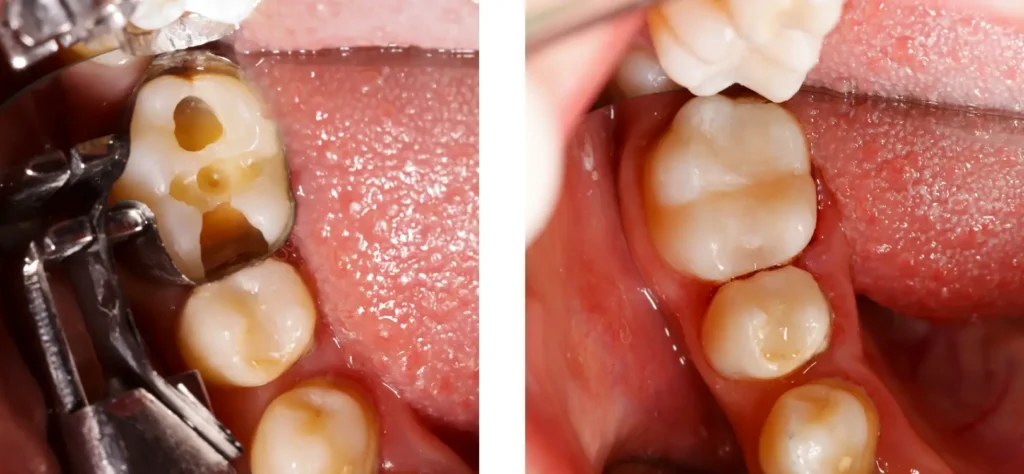
Tooth-colored composite is made from a resin-based material containing reinforcing filler particles. Once placed, shaped, and hardened, it can restore the damaged area while closely matching the surrounding enamel.
Earlier generations of composite did not always perform as well under heavy chewing forces as amalgam. Modern materials and bonding techniques have changed that considerably. This raises a common question: are white fillings as strong as metal?
Modern composite can be durable enough for many front and back teeth. However, the answer depends on the size and location of the filling, how much healthy tooth remains, and how heavily that tooth is loaded during chewing.
For a modest cavity with plenty of surrounding tooth structure, composite may be an excellent long-term option. A very large restoration on a heavily loaded molar creates a different challenge.
Sometimes neither composite nor amalgam is the ideal solution for a badly weakened tooth. A crown, inlay, onlay, or another restoration may provide more appropriate support.
3. Tooth-Colored Fillings Bond to the Tooth
One important difference between the materials is how they stay in place. Composite is bonded to the prepared tooth using adhesive techniques. This bond allows the material to become closely integrated with the remaining tooth structure.
Because of this, white fillings can often be placed with a conservative preparation. The dentist removes decay and damaged material while preserving healthy structure whenever possible. Amalgam does not bond to enamel and dentin in the same way. The tooth traditionally needs to be shaped so the restoration can be mechanically retained.
Preserving natural tooth structure is valuable because every restoration ultimately depends on the tooth supporting it. This does not automatically mean composite will last longer. Bonding is technique-sensitive, and moisture contamination during placement can affect the quality of the restoration.
The material needs to be selected and placed appropriately for the individual clinical situation.
4. Filling Size Changes the Equation
A filling does not exist independently from the tooth around it. The amount of healthy structure remaining can have a major influence on long-term success. A small filling surrounded by strong enamel and dentin has considerable natural support.
As restorations become larger, less original tooth structure remains. The remaining walls may become more vulnerable to cracks or fractures, especially in back teeth that handle strong chewing forces. This is why asking how long do fillings last without considering size can produce an incomplete answer.
Two patients can receive the same filling material and have very different outcomes. One may have a small cavity between two teeth, while another has a large restoration replacing much of a molar. Eventually, there can be a point where repeatedly enlarging a filling is no longer the best restorative strategy.
If a tooth is significantly weakened, the dentist may recommend greater coverage rather than another filling. Protecting what remains of the natural tooth becomes more important than staying loyal to one material.
5. Your Bite Has Something to Say
Some people place far more force on their restorations than they realize. Clenching and grinding, also known as bruxism, can expose fillings to repeated stress. A restoration may look perfectly fine at first but experience thousands of high-pressure contacts over time.
That can affect both composite and amalgam. Large fillings may be especially vulnerable when a patient has heavy biting forces. The surrounding natural tooth can also crack, meaning the filling itself is not always what fails first.
This is another reason filling material lifespan varies so much between patients. The dentist can examine the bite and look for signs such as flattened teeth, worn enamel, cracks, or damaged restorations. If grinding appears to be contributing to dental wear, additional strategies may be discussed.
No filling material becomes indestructible simply because it performed well in a laboratory test. It has to survive the way a real patient eats, clenches, brushes, and lives.
6. Composite Wins on Appearance
When durability is similar enough for the clinical situation, appearance can become an important deciding factor. Composite can be selected in a shade designed to blend with the natural tooth. This is especially valuable for restorations that show when you speak, laugh, or smile.
Metal amalgam is much more visible. A silver filling may also appear darker with age, creating a noticeable contrast against the surrounding enamel. For some patients, that appearance is the main reason they begin asking about replacement.
Tooth-colored restorations can provide a more discreet result without advertising where dental work has been performed. That does not mean every visible metal filling should automatically come out.
Cosmetic preference is worth discussing, but removing a functional restoration also means performing additional dental work on the tooth. The benefits and trade-offs should be considered before replacing something solely because of its color.
7. A Good Metal Filling Does Not Automatically Need Replacement
Patients frequently ask, should I replace old metal fillings simply because they have been there for many years. Age alone is not always a reason for removal. If an amalgam filling remains intact, the surrounding tooth is healthy, and there is no evidence of recurrent decay or structural problems, a dentist may recommend continuing to monitor it.
Replacement becomes more relevant when there is a clinical reason. That might include decay around or beneath the restoration, a fracture, significant wear, a compromised margin, or damage to the surrounding tooth. Cosmetic preference can also be discussed, but it should be weighed against the fact that replacing a filling requires working on the tooth again.
Regular examinations allow older restorations to be monitored instead of replaced according to an arbitrary calendar. The best filling is often the one that is still functioning properly.
8. Mercury Concerns Deserve Context
The word “mercury” understandably gets people’s attention. Dental amalgam contains elemental mercury combined with other metals to create a stable restorative material. Some patients therefore ask about mercury filling replacement even when their restorations are not damaged.
Current FDA guidance states that existing amalgam fillings in good condition generally should not be removed solely to prevent disease in people without a medical need for replacement. Removing an intact filling unnecessarily can result in loss of healthy tooth structure and a temporary increase in mercury vapor exposure during removal.
The FDA also identifies certain higher-risk groups for whom non-mercury alternatives may be preferred when new restorations are needed, when appropriate. This is a conversation worth having with your dentist rather than making the decision from alarming social media posts.
If an old amalgam restoration is cracked, failing, or surrounded by decay, replacement may be appropriate for ordinary dental reasons. If it is healthy and functional, the recommendation can be different.
9. Moisture Matters More With Composite
Composite’s ability to bond to natural tooth structure is one of its strengths, but it also makes placement technique important. The treatment area needs appropriate moisture control while the adhesive and composite are being placed. Saliva or other contamination can interfere with the bonding process.
Dentists use isolation techniques to keep the area appropriately controlled during treatment. This is one situation where amalgam historically had an advantage. It is generally less sensitive to moisture during placement than adhesive composite restorations.
Modern dental techniques make composite practical for a wide variety of teeth, but the location of a cavity can still influence material choice. A restoration deep near the gumline, for example, may present different isolation challenges from a small cavity on an easily accessible tooth.
The best material is not simply the newest one. It is the material that can be predictably placed under the conditions presented by that particular tooth.
Choose for the Tooth, Not the Trend
Metal and tooth-colored dental fillings can both provide durable restoration when used appropriately. Amalgam has a long history of strength, while modern composite combines reliable function with the cosmetic advantage of blending into the natural smile.
At Fame By You, the decision can start with the condition of your tooth rather than an automatic preference for one material. Whether you need a new filling or want an older restoration evaluated, thoughtful treatment considers strength, appearance, remaining tooth structure, and long-term oral health together.
Connect with us today to schedule your consultation!